
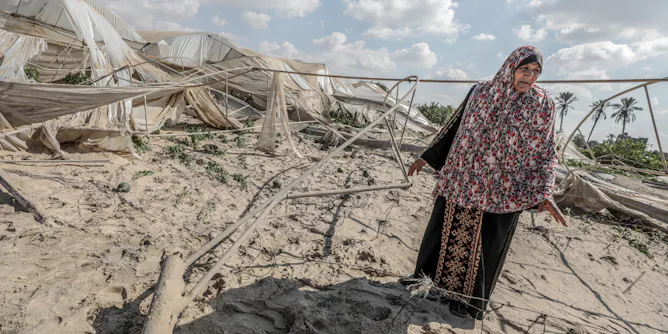
A specialist in conflict-affected food and farming visits the Gaza Strip.
Articles on Food security
Displaying 141 - 160 of 559 articles
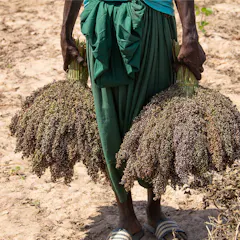
As droughts intensify, how can we increase crop production in a sustainable way? This is a multidimensional scientific and societal challenge to ensure future food security.
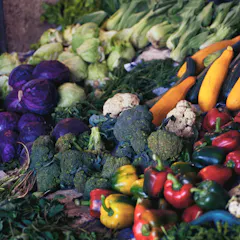
An Australian-first study found 16% of surveyed staff at one university experienced food insecurity over the past 12 months.
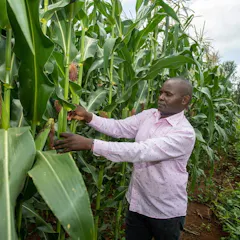
The future food security of nearly 1.5 billion Africans depends on the actions and decisions that are made today.
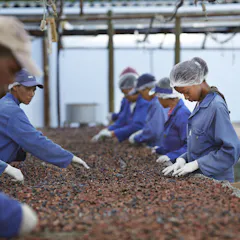
Small-scale farmers find it difficult to commercialise and add value to the food chain.
Plants have evolved several ways to deal with heavy metals that might otherwise poison or kill them.

Growing fresh produce on the outskirts of a city reduces food miles and increases food security. But the foodbowls next to our our big cities are fast losing their land to urban growth.
Most of the flooded communities are Indigenous and rely on subsistence hunting that residents would normally be doing right now. Recovering from the damage will make that harder.

The research reviewed the available evidence on microalgae as food supplements, livestock feeds, biofertilisers, biostimulants and biochar feedstocks.

Food insecurity is a social justice issue tied to social determinants of health. Historically marginalized people like 2SLGBTQ+ youth are at risk, and more likely to be food insecure during COVID-19.
Skills training in Zimbabwe excludes students from poor backgrounds. The informal sector should be used as a training ground for them.
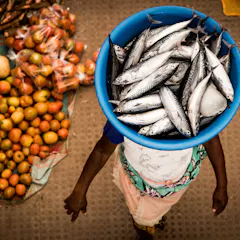
The ability of West Africa’s fisher women to cope or adapt in times of adversity should not let policymakers off the hook.

The emission reduction targets outlined for Canadian fertilizer use will not lead to food shortages and food insecurity.
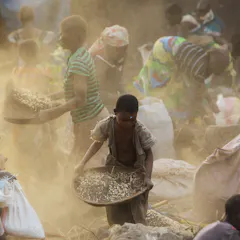
Food insecurity is increasing in Australia and around the world with women most affected.
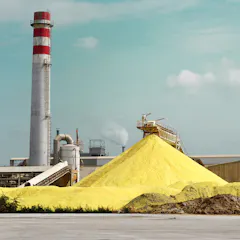
A key ingredient for a green future is currently derived from fossil fuels.
CC BY-NC-ND12.5 MB (download)
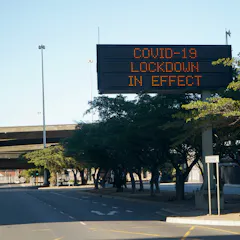
People in South Africa felt anxious and stressed during the COVID-19 lockdown.

Nuclear war would trigger a global food crisis lasting at least a decade, in which hundreds of millions or more would be likely to starve.
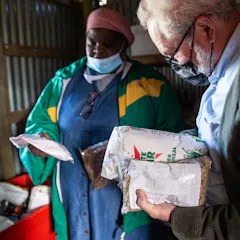
Removing a pre-existing right like cancelling the school nutrition programme is a retrogressive measure, and should only be done under very specific circumstances.

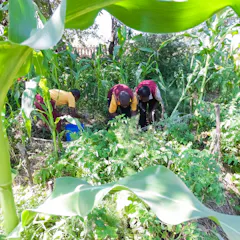
Gardens require huge labour, and outcomes like health, well-being or food security are affected by systemic barriers people face in cities and schools.
A ‘learning journey’ research process exposed a broad group of participants to local realities of the food system and childcare in a small town.
Top contributors
-

Senior Fellow, Department of Agricultural Economics, Stellenbosch University
-
Associate Professor in Food Systems, The University of Melbourne
-
Research Fellow, Tegemeo Institute, Egerton University
-
Associate Professor, Department of Entomology; African-American Studies, University of Illinois Urbana-Champaign
-
PhD, Political Economy, Macquarie University
-
Professor of Food Policy, City St George's, University of London
-
Researcher in sustainable food systems, The University of Melbourne
-
Director of the Arrell Food Institute and Professor in the Dept. of Geography, Environment and Geomatics, University of Guelph
-
Network and Research Manager: ARUA – UKRI GCRF FSNet Africa, University of Pretoria
-
Professor in Food Security; Head of the Department of Agricultural Economics, Extension and Rural Development, University of Pretoria
-
Emeritus Fellow in Plant Biochemistry, University of Westminster
-
Professor of Social Development Studies, University of Johannesburg
-
Food Systems Research and Partnerships, The University of Melbourne
-
Adjunct Professor, Curtin Business School, Curtin University
-
Climate Scientist and Researcher, University of Cape Town