

The model – based on justice and social responsibility – is not just for Muslim investors.
Articles on Green transition
Displaying 41 - 60 of 153 articles
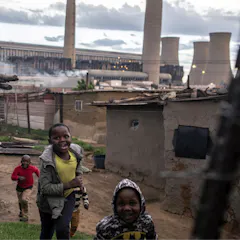
The South African government and coal industry need to move fast to set up a plan to turn old coal mines and power stations into job-creating hubs after they close.
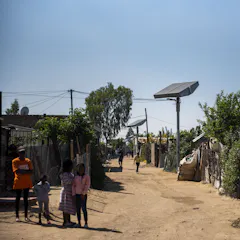
In South Africa, many low-income families who’ve never had electricity can’t afford solar power. Solar mini-grids could help.

South African homes need two-way meters so that they can feed extra solar power from home systems and electric vehicles back to the grid.
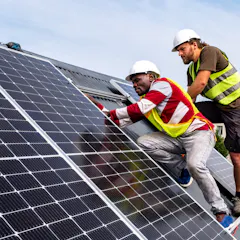
South Africa needs a renewable energy industrial strategy, not just requirements for green power projects to buy a percentage of solar parts from local companies.

Ensuring that all young people develop strong climate and nature literacy will be essential for both personal resilience and national prosperity.

South Africa’s G20 presidency highlighted climate action and just energy transitions.

Wastewater heat recovery, which recycles hot water from drains to preheat new water, could cut coal use, lower carbon emissions, and create local jobs in Zambia.

Decarbonisation is not just about changing fuels. It involves a change in our pace of living and adjusting expectations.
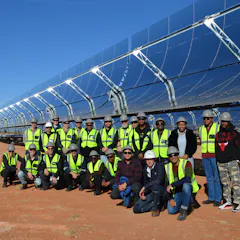
India links new rural power lines to solar projects, providing cleaner energy for farms, while South Africa has ways for communities to benefit from green energy profits.

Mine water district heating schemes provide an opportunity to involve communities in their energy futures.

New fees could stall the transition to more environmentally friendly vehicles.
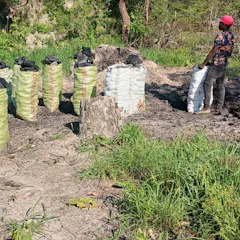
In rural Zambia, solar power has brightened lives, but communities living next to forests can only pay for it by cutting down trees, putting forests at risk.
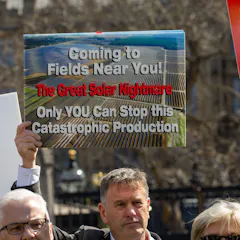
Reform UK is exploiting opposition to solar panels – but most farmers are more worried about climate change.
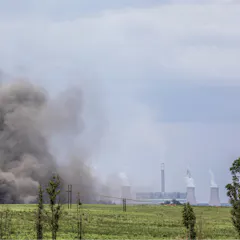
South Africa’s coal mines seem to be leaking far more methane than official records show.
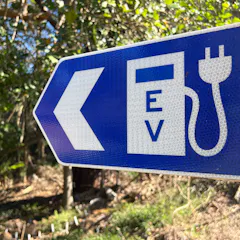
To boost the slow uptake of EVs in Australia, authorities have focused on expanding the charger network and ensuring chargers are online. But this won’t be enough.
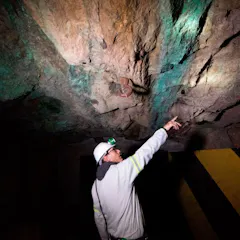
The competition for Africa’s critical minerals between China and the West presents an opportunity.

Neurodivergent people can remain invisible and undervalued in a booming job market.

In advance of the release of the 2025 UK critical minerals strategy, the excitement for onshoring mining cannot ignore local experiences.
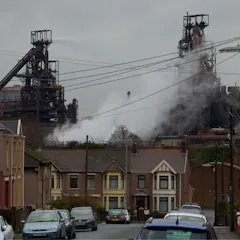
When net zero leaves communities behind, people get angry.
Top contributors
-

Professor in Mechanical and Mechatronic Engineering, Stellenbosch University
-
Senior Lecturer, Africa Energy Leadership Centre, University of the Witwatersrand
-
Lecturer in Sustainability and Fellow of Indo Pacific Research Centre, Murdoch University
-
Professor of Economics, University of Pretoria
-
Visiting Adjunct Professor, African Energy Leadership Centre, Wits Business School, University of the Witwatersrand
-
Professor of Industrial Strategy & Regional Development, Co-Director Centre for Governance, Regions and Industrial Strategy (CGRIS), University of Bath
-
Researcher in Environmental Science, Rhodes University
-
Professor of Business Economics, University of Birmingham
-
Professor and Head of the Department of Geography, Geoinformatics & Meteorology, University of Pretoria
-
Director, Columbia Center on Sustainable Investment, Columbia University
-
Senior Research Associate, University of Johannesburg
-
Climateworks Centre Country Lead, Australia, Monash University
-
Research Specialist, Faculty of Economic and Management Sciences, University of Pretoria
-
Professor of Operations Management, University of Bristol; University of Bath
-
Professor and Director, Victoria Energy Policy Centre, Victoria University