
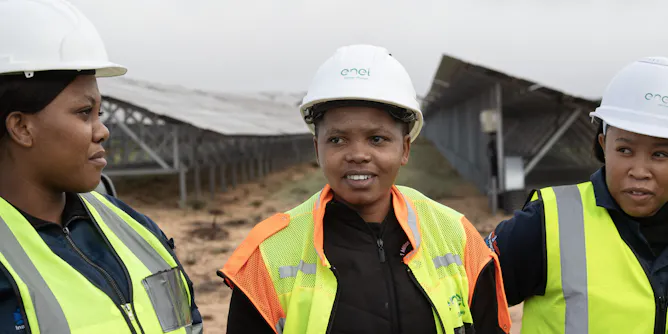
The South African government has not invested enough for renewable energy to contribute to long-term economic growth.
Articles on Green transition
Displaying 81 - 100 of 153 articles
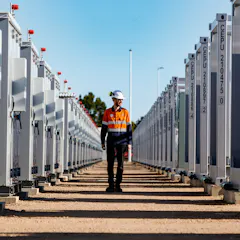
Everyone knows the sun doesn’t shine at night. That’s where firming technologies help, by stabilising the grid and storing cheap power for later
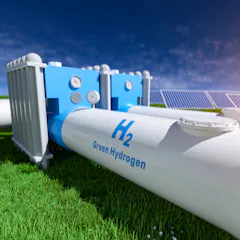
Chemical engineering specialists have mapped out the risks for South Africa in setting up a multi-billion dollar green hydrogen industry.
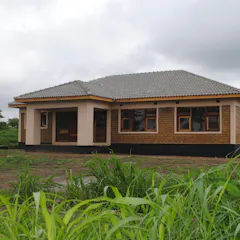
In Zambia, a project using local materials to build houses, instead of imported steel and concrete, resulted in benefits for small businesses and artisans.
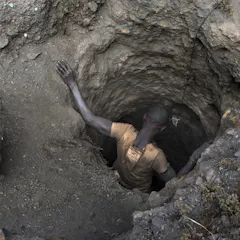
Lubumbashi is little known, but its minerals electrified the world, created atom bombs and are key to greener energy, the defining geopolitical issue of our time.
Smaller firms struggle to get the finance they need to become greener – but new partnerships between governments and banks could be part of the solution.
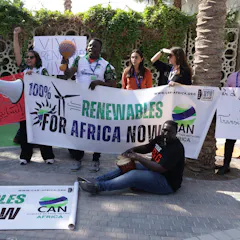
The transition to renewable energy in Africa should have energy for everyone as its goal or the 600 million African people who lack electricity may remain without.
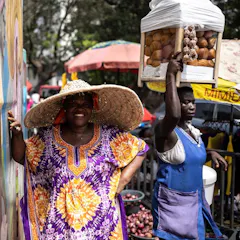
Simple either/or ways of seeing women overlook the power dynamics and structural factors that give rise to the stereotypes.

Giving aluminium smelters tax incentives to switch to clean energy is long overdue. The question now is how to accelerate the clean energy rollout

When lower-income households face affordability barriers, it’s not just their problem – it’s the missing link to achieving a full switch to electric vehicles.
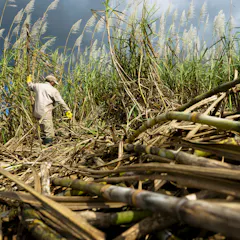
Burning sugarcane trash is common in South Africa. With support small-scale sugarcane farmers could turn this plant waste into bioenergy.

The South African Reserve Bank’s mandate is price and financial stability. It has the tools to identify, analyse and manage these risks, including those linked to climate change.
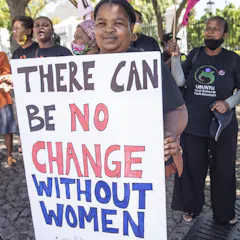
Evidence suggests that a low-carbon transition could worsen gender inequalities if not properly addressed in climate policy.
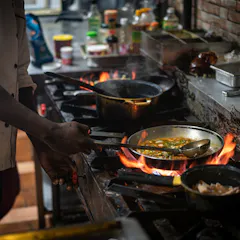
If Nigeria doesn’t roll out clean fuels fast, its carbon dioxide emissions from cooking on firewood will triple by 2060, new research has found.
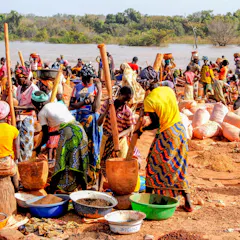
A just transition goes beyond ‘greening’ energy systems. It must also focus on the unrecognised labour – mostly of women – that makes green energy industries possible.

The green talent in short supply includes wind and solar farm technicians and engineers, solar panel installers, green energy auditors, hydrogen fuel cell specialists, and data scientists.
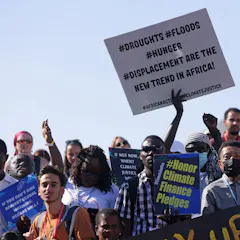
African countries need to unite and negotiate strongly at COP29 for more climate change adaptation grants and fewer loans that only leave the continent paying back debt.

African governments must use the COP29 global climate change conference to make sure that artificial intelligence-driven advancements in agriculture and food production benefit all on the continent.

New approaches to economic policy are needed to address the roots of people’s disenchantment and avert ecological catastrophe.
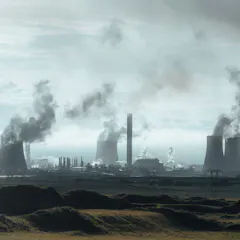
Sasol’s Secunda facility is the largest greenhouse gas emitter in the world. New research looks at what’s needed to move the petrochemical manufacturer away from coal.
Top contributors
-

Professor in Mechanical and Mechatronic Engineering, Stellenbosch University
-
Senior Lecturer, Africa Energy Leadership Centre, University of the Witwatersrand
-
Lecturer in Sustainability and Fellow of Indo Pacific Research Centre, Murdoch University
-
Professor of Economics, University of Pretoria
-
Visiting Adjunct Professor, African Energy Leadership Centre, Wits Business School, University of the Witwatersrand
-
Professor of Industrial Strategy & Regional Development, Co-Director Centre for Governance, Regions and Industrial Strategy (CGRIS), University of Bath
-
Researcher in Environmental Science, Rhodes University
-
Professor of Business Economics, University of Birmingham
-
Professor and Head of the Department of Geography, Geoinformatics & Meteorology, University of Pretoria
-
Director, Columbia Center on Sustainable Investment, Columbia University
-
Senior Research Associate, University of Johannesburg
-
Climateworks Centre Country Lead, Australia, Monash University
-
Research Specialist, Faculty of Economic and Management Sciences, University of Pretoria
-
Professor of Operations Management, University of Bristol; University of Bath
-
Professor and Director, Victoria Energy Policy Centre, Victoria University