
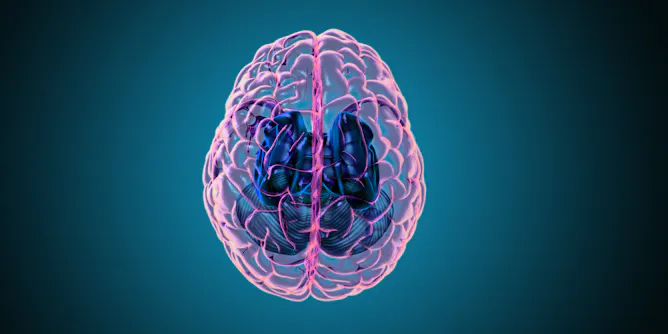
The brain is surprisingly changeable.
Articles on Neuroscience
Displaying 361 - 380 of 866 articles

Feelings of empathy for others may be plentiful in a year of suffering. But is feeling more empathy to loved ones than strangers morally right? A research team sought to find out.

Shakespeare was wrong when he wrote ‘all’s well that ends well’.

In 1983, one study by an American physiologist set off an explosion of research about free will and the brain.

Recent findings from social neuroscience show us how we can make virtual interactions almost as beneficial as real world ones.

Scientists are revealing the extent to which our behaviour is influenced by our genes, calling into question our capacity for free will. But there is still scope for change.

Is everything predetermined, or is it all random? Or is there something in between that we call free will that defies our attempts to explain it?

Why the benefits of bilingualism aren’t consistent.
What causes unprovoked acts of violence? And is there any place for such cruelty in our society?

Elon Musk’s OpenAI has developed software that can produce human-like writing. Don’t mistake that for true intelligence.

Although a great deal of research is still required, it may one day be possible to identify and treat people either with CTE, or at risk of it.

Your mouth might be obscured, but science shows you say a huge amount with your eyes.
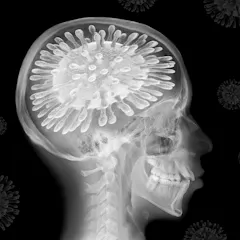
Whether you had COVID-19 or just stressed out about getting it, your brain’s hippocampus may have shrunk in the last few months.

Rats, too, struggle to learn how to do new things in new places — but it does get easier over time.
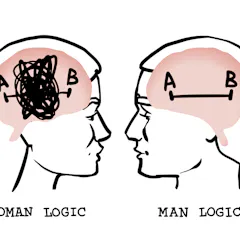
From having small brains to being better at reading, it is often argued that women aren’t well suited to do science.
Medical treatments involving neurostimulation are resurfacing and appear to be more effective than drugs in treating depression.
A bioengineer explains how a clearer picture of brain structure and function may fine-tune the ways brain surgery attempts to correct structure and medication tries to correct function.
False beliefs about the brain, called neuromyths, are ubiquitous in education. Is there any hope of debunking them?
Air traffic controllers have to process and manage large amounts of information to get airplanes to their destinations. The brain manages the incessant traffic of neurons in a similar fashion.

Brains recognize a smell based on which cells fire, in what order – the same way you recognize a song based on its pattern of notes. How much can you change the ‘tune’ and still know the smell?
Top contributors
-

Professor of Clinical Neuropsychology, University of Cambridge
-
Penn State
-
Postdoctoral Research Associate, Cognitive Neuroscience, University of Cambridge
-
Senior Lecturer (Adjunct), Nutritional neuroscientist, Adelaide University
-
Head of Developmental Psychobiology Lab, Deakin University
-
Postdoctoral Researcher in Cognitive Neurosciences, The University of Queensland
-
Senior Research Fellow, Uehiro Centre for Practical Ethics, University of Oxford
-
Professor of Anatomy, University of Bristol
-
Professor Emeritus of Cognitive NeuroImaging, Aston University
-
Professor of Cognitive Neuroscience, Bangor University
-
Senior Research Fellow, The Perron Institute for Neurological and Translational Science, and Faculty of Health Sciences, Curtin University
-
Associate Professor of Family & Community Medicine and Pediatrics, retired, University of California, San Francisco
-
Professor of Behavioral Neuroscience, University of Richmond
-
Lead, Cognition and Consciousness Imaging Group, Division of Anaesthesia, University of Cambridge
-
Associate Professor in Clinical Psychology and Neuropsychology, Trinity College Dublin