
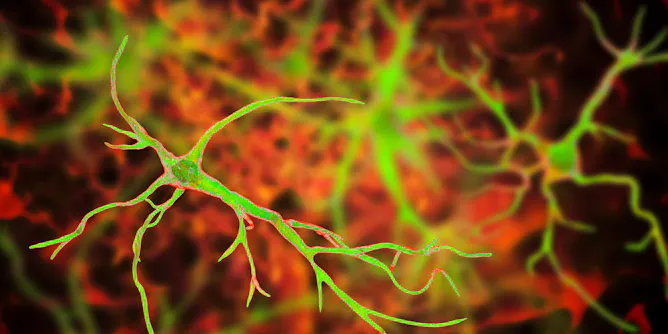
From the archive: new research helps unpick clues about the brain’s ability to change its structure. Listen to The Conversation Weekly podcast.
Articles on Neuroscience
Displaying 341 - 360 of 866 articles
Ready to party post-pandemic, but at the same time feeling shy? Here’s how social isolation affects the brain – and what research suggests about the effects of resocialization.

Fetal brains are changing rapidly over the course of pregnancy, but so are the brains of mothers-to-be. Neuroscience research shows one way worry can start taking hold – and a simple way to help.

To tell you the truth, nobody really knows. But it’s probably got to do with the fact that signals from your nose and your eyes arrive in the same area of your brain.

A transcript of episode 13 of The Conversation Weekly podcast, including new research on neuroplasticity in the brain.

Early reports suggested an apparent increase in OCD relapse rates and symptom severity during the pandemic. But a year on, we’re learning this may not be the case.
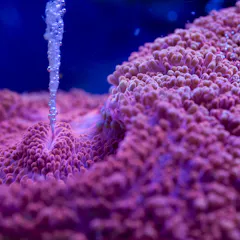
Scientists still still don’t fully understand how general anaesthesia affects the brain and body. A molecule found in bioluminescent stony coral may shed some light.

Rather than distinctly male or female, the human brain is much more like the heart, kidneys and lungs – basically the same no matter the sex of the body it’s in.
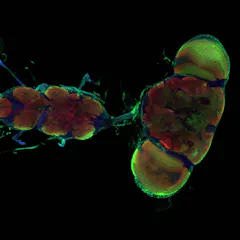
Adaptable neurons are tied to learning and memory but also to neurological disorders. By studying fruit flies, researchers found a mechanism that controls neuroplasticity.
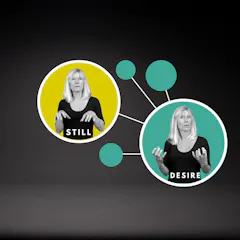
In American Sign Language, some words rhyme, some look like what they mean and some are used more often than others. A new database of these features paves a pathway for ASL research.
As the UK’s first clinic to offer psychedelic drugs for mental health disorders opens, a study reveals that informed users don’t have problems with self control.

Blame your ears, your eyes and your brain. But mainly your ears!
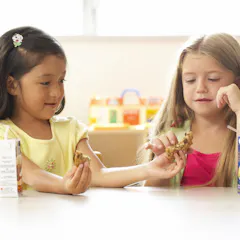
Cognitive neuroscientists use brain imaging and behavioral economic games to investigate people’s sense of fairness. They find it’s common to take care of yourself before looking out for others.
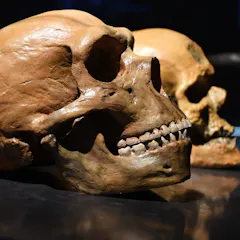
Neanderthal-human hybrid brains grown in the lab give fascinating insights into evolution.
Children aren’t just losing out on education as a result of the pandemic.
New research demonstrates that it is more difficult to learn something new if the information had been rewarded in the past. In fact, the higher the reward, the worse the future learning.

Neuroscientists tackling the age-old question of whether perceptions of color hold from one person to the next are coming up with some interesting answers.
While there are small differences between male and female brains, most of us have a mix of both.
Atheists may think more analytically than religious people, but it is far from proven.
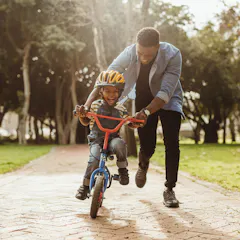
The brain activity of a parent and child can become synchronised during play and problem solving.
Top contributors
-

Professor of Clinical Neuropsychology, University of Cambridge
-
Penn State
-
Postdoctoral Research Associate, Cognitive Neuroscience, University of Cambridge
-
Senior Lecturer (Adjunct), Nutritional neuroscientist, Adelaide University
-
Head of Developmental Psychobiology Lab, Deakin University
-
Postdoctoral Researcher in Cognitive Neurosciences, The University of Queensland
-
Senior Research Fellow, Uehiro Centre for Practical Ethics, University of Oxford
-
Professor of Anatomy, University of Bristol
-
Professor Emeritus of Cognitive NeuroImaging, Aston University
-
Professor of Cognitive Neuroscience, Bangor University
-
Senior Research Fellow, The Perron Institute for Neurological and Translational Science, and Faculty of Health Sciences, Curtin University
-
Associate Professor of Family & Community Medicine and Pediatrics, retired, University of California, San Francisco
-
Professor of Behavioral Neuroscience, University of Richmond
-
Lead, Cognition and Consciousness Imaging Group, Division of Anaesthesia, University of Cambridge
-
Associate Professor in Clinical Psychology and Neuropsychology, Trinity College Dublin