
Science communication has grown in leaps and bounds over the past 60 years. It plays a crucial role in democratising science and making it less mysterious.
Articles on Citizen science
Displaying 181 - 200 of 217 articles
We should welcome the fact that amateur astronomers are increasingly keeping tabs on what’s going on up above.
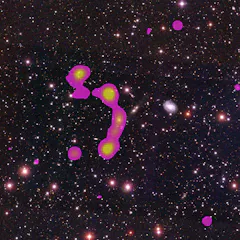
The find by citizen scientists of at least 40 galaxies in a cluster more than a billion light years away is the astronomical equivalent of finding a needle in a haystack.

Some of the most in-demand ecologists in Africa are specialists in statistics. But this is currently a scarce skill combination in Africa.

Bird feathers can tell us a lot about their owners and the places they visit.

Computers are getting better and better at the jobs that previously made sense for researchers to outsource to citizen scientists. But don’t worry: there’s still a role for people in these projects.
Extragalactic astrophysicists want to know how and why galaxies stop forming stars, change their shape and fade away. With help from citizen scientists, they’re figuring it out.
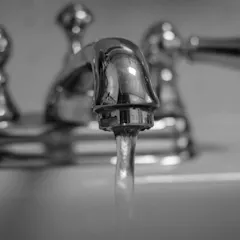
A new model of citizen-led science is emerging – as in the case of Flint, Michigan’s poisoned water. Rather than simply supporting scientists, citizens ask their own questions and set the research agenda.
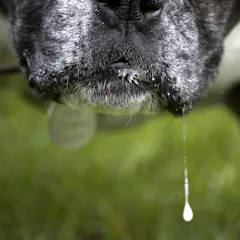
Researchers want your canine’s DNA to help unravel the connections between genes and behavior – for dogs and human beings.
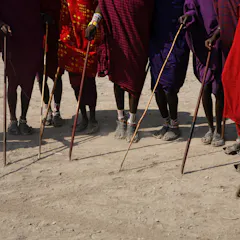
Africa’s soil crisis calls for quick and creative action. This includes deepening farmers’ knowledge about soil microbes.
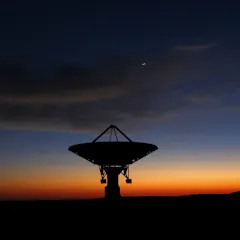
Citizen science will ensure that the skies have no limit when it comes to research, as ordinary people are encouraged to take part in simple acts of exploration.

Early warning systems are available for things like tsunamis and diseases. Why not for animals as well?

It’s National Science Week and this year the annual citizen science project run by ABC Science is astronomy-themed. No guesses for knowing that I’m excited about that! It’s also a nod to 2015 being the…

Convincing the public to not just take part in but to design and run research programmes is providing new behavioural insights for doctors.
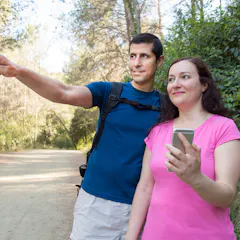
Rapid changes in technology are transforming the contributions ordinary citizens can make to scientific research.

Sometimes the best way to deal with mountains of data is to turn to the public for help. That’s what Snapshot Serengeti did to classify millions of photos from savanna camera traps in Tanzania.
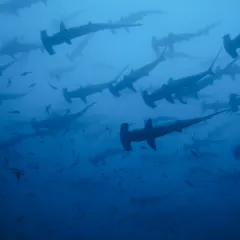
Divers at the famed Cocos site off Costa Rica record declines in a number of shark species – a sign that marine preserves are limited protection against illegal fishing.

Amateurs and experts worked together to unravel the mystery of a new moth, the first discovery of its kind in 40 years.
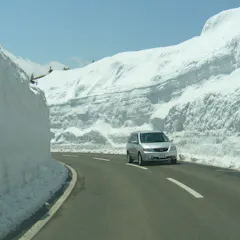
It’s really hard to measure snowfall accurately. The National Weather Service relies on more than 8,000 volunteers with rulers.
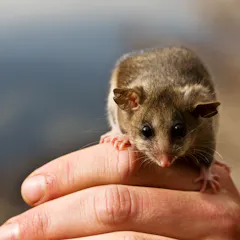
Every Spring, the blanket of Australian alpine snow starts to melt, and the Mountain Pygmy Possum wakes up from its seven-month-long hibernation. Naturally after so long under the snow, its first thought…
Top contributors
-

Curator, Amphibian & Reptile Conservation Biology, Australian Museum, UNSW
-
Professor of Science Communication and Chemistry, University of Hull
-
Lecturer, School of Life and Environmental Sciences, University of Sydney
-
Sector Lead, Atlas of Living Australia, CSIRO
-
Dean Students, College of Health, Adelaide University
-
Associate Professor in Ecology and Evolution, UNSW
-
Associate Professor, Animal Anatomy and Physiology, Charles Sturt University
-
Adjunct Fellow, Institute for Sustainable Futures, University of Technology Sydney
-
Research Fellow at the University of Sydney, University of Sydney
-
Clinical Associate Professor, School of Medical Science & Sydney Infectious Diseases Institute; Principal Hospital Scientist, University of Sydney
-
Postdoctoral Fellow, Evolution & Ecology Research Centre, UNSW Sydney, UNSW
-
Associate Professor in Biology, Zoology and Animal Science, Western Sydney University
-
Associate Teaching Professor of Meteorology and Atmospheric Science and Manager of the Joel N. Myers Weather Center, Penn State
-
Honorary Fellow, Space and Astronomy, CSIRO; Western Sydney University
-
Chair of ARC Centre of Excellence for Quantum Biotechnology, The University of Queensland