
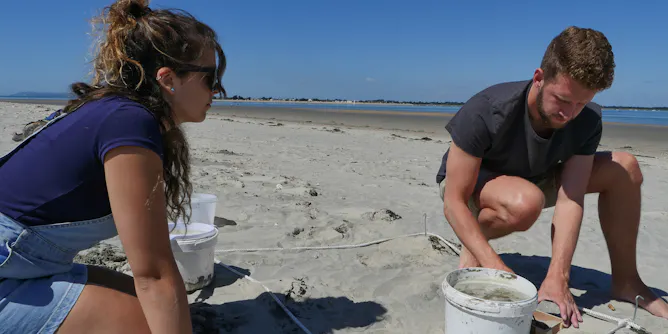
Volunteers from all over the world are taking part in a citizen science project to help scientists work out how bad microplastic pollution really is.
Articles on Citizen science
Displaying 141 - 160 of 217 articles
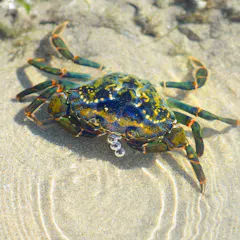
Citizen science game offered clues to why shore crabs get greener as they grow.
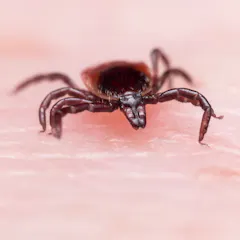
Fall is peak activity time for adult blacklegged ticks, increasing the risk of tick bites on both people and pets.
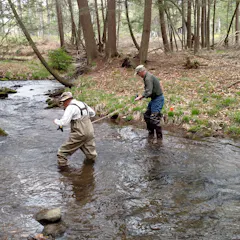
When people form local networks to take care of resources such as drinking water, they strengthen their communities. Technology can support these efforts and promote learning and innovation.
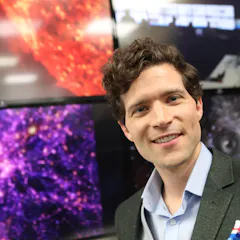
The 2018 Australian Museum Eureka Prize winners include astrophysicist and science communicator Alan Duffy and the citizen science app QuestaGame.
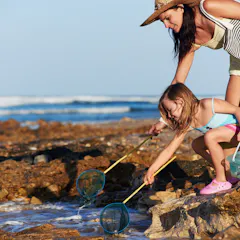
Elusive and mysterious by nature, ordinary people are revealing the secrets of the UK’s octopuses.
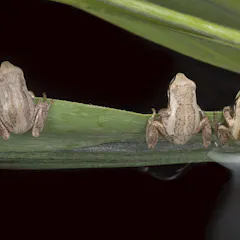
Climate change can seem far removed from our everyday lives, which is why a citizen science program measuring how frogs are dealing with a warming world is so important.

Astronomers are gathering an exponentially greater amount of data every day – so much that it will take years to uncover all the hidden signals buried in the archives.

We often focus on the “science” part of citizen science. The “citizen” is important as well. It reminds us that we are part of something greater than ourselves, with a duty to generations to come.
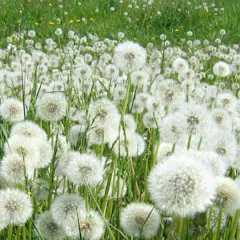
Does big data threaten how humans explore the natural world? We need to protect our impulses to observe, compare, play, discover and love, no matter what technological capabilities are available.

Citizen science isn’t just about charity – new research shows there are some quite unexpected benefits for participants.
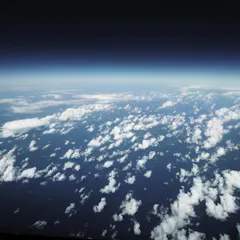
Easy experiments that show the Earth is round.
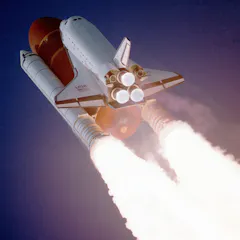
It might feel like rocket science, but scientists need to get better at explaining things to people outside academia.
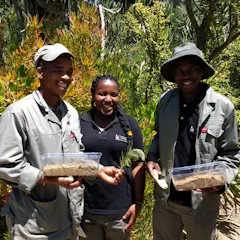
Humans - the very “carriers” who can spread dangerous microbes unthinkingly from their equipment and shoes - can instead become the first line of defence against a possible microscopic invasion.
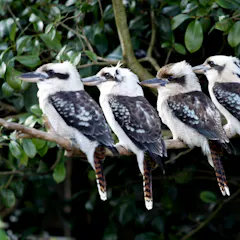
The fourth Aussie Backyard Bird Count, which has just finished, has some potentially worrying news about one of our best-loved species.
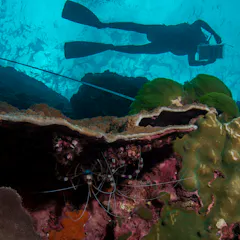
Reef Life Survey, a citizen science project where hundreds of volunteer scuba divers survey thousands of ocean sites, has revealed new insights into marine mysteries.
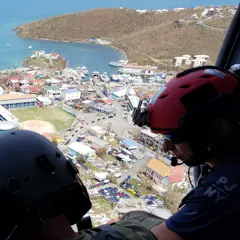
With this technology, citizen scientists could even help to predict the damage caused by future disasters.

Killing insects, as the Big Wasp Survey asked people to do, contributed to many vital advances in science.
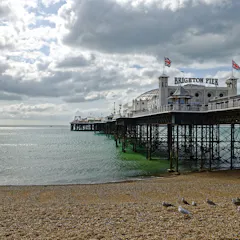
Anthill 17: Science by the seaside
CC BY-ND44.8 MB (download)
From the man who gave away his genome under open consent, to the 'Mathematikado', this episode of the podcast features highlights from the British Science Festival in Brighton.

Help us put this old wives’ tale to a scientific test.
Top contributors
-

Curator, Amphibian & Reptile Conservation Biology, Australian Museum, UNSW
-
Professor of Science Communication and Chemistry, University of Hull
-
Lecturer, School of Life and Environmental Sciences, University of Sydney
-
Sector Lead, Atlas of Living Australia, CSIRO
-
Dean Students, College of Health, Adelaide University
-
Associate Professor in Ecology and Evolution, UNSW
-
Associate Professor, Animal Anatomy and Physiology, Charles Sturt University
-
Adjunct Fellow, Institute for Sustainable Futures, University of Technology Sydney
-
Research Fellow at the University of Sydney, University of Sydney
-
Clinical Associate Professor, School of Medical Science & Sydney Infectious Diseases Institute; Principal Hospital Scientist, University of Sydney
-
Postdoctoral Fellow, Evolution & Ecology Research Centre, UNSW Sydney, UNSW
-
Associate Professor in Biology, Zoology and Animal Science, Western Sydney University
-
Associate Teaching Professor of Meteorology and Atmospheric Science and Manager of the Joel N. Myers Weather Center, Penn State
-
Honorary Fellow, Space and Astronomy, CSIRO; Western Sydney University
-
Chair of ARC Centre of Excellence for Quantum Biotechnology, The University of Queensland