
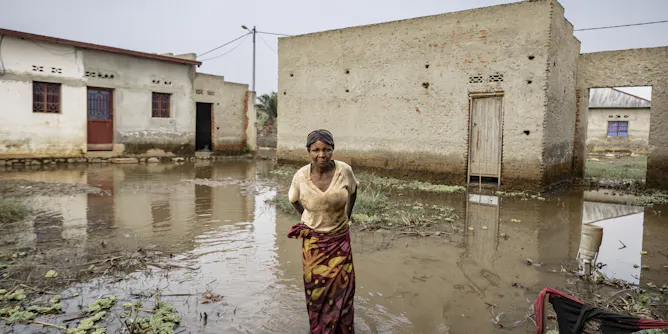
South Africa’s G20 presidency is a chance to lobby for investment in drought-tolerant crops, better irrigation, and early warning systems.
Articles on Citizen science
Displaying 21 - 40 of 217 articles
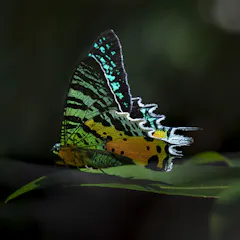
With the warmer weather come more of these fluttering insects – which can be easily confused with each other.
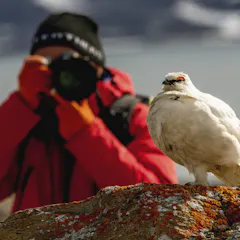
In 2002, an online database was set up allowing birdwatchers to record their species observations. It is now a vast resource, shaping scientific research.
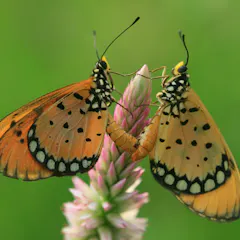
The lack of data about insect life in Australia is already having consequences for plants, animals, and even people.

Climate change is already reshaping the towering mountain ash forests of southeastern Australia, new research shows.
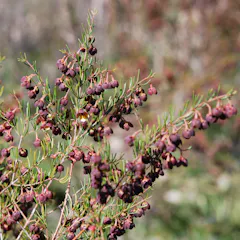
A team of scientists has discovered the secret to making ‘Boronia Babies’ is a tiny moth. Heliozelidae pollinate the weird flowers made famous by May Gibbs.

Can a new database of 3D bone scans help solve the mystery of the elusive ngudlukanta?
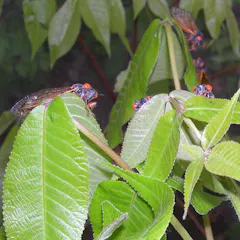
Two ecologists explain why a misleading map is worse than no map at all, and how they have worked for years to track the emergences of 13-year and 17-year cicadas.

People counted and collected invasive Pacific oysters found on the seabed and then went on to cook them.
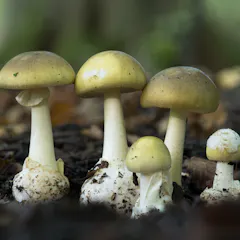
iNaturalist might turn out to be an important part of the murder trial, but how else can observations of plants and animals be used?
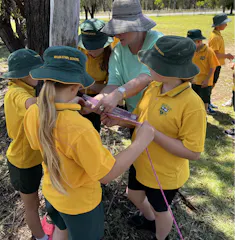
Citizen science project ‘Insect Investigators’ takes scientists to regional schools to teach students to track and identify insects.
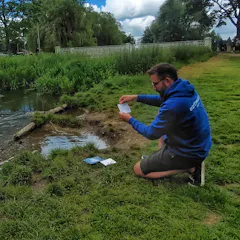
Citizen science can shape policy at every level, from local projects to global initiatives.
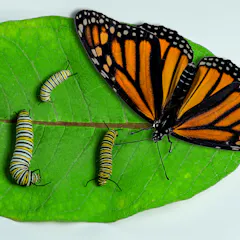
Will protecting monarch butterflies under the Endangered Species Act improve their chance of surviving? Not necessarily, 2 entomologists caution.
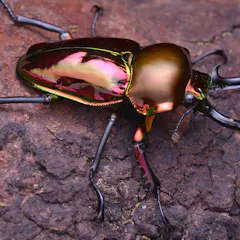
Summer is a great time to go beetle-watching in Australia. By protecting these dazzling insects, we can ensure they survive for future generations to enjoy.

Summer is here and mosquitoes are ready to bite. Tracking them is important for staying on top of public health risks – and citizen scientists can help.

A new law is forcing water companies to make pollution data readily accessible to the general public - but it doesn’t go far enough.

A new largest known prime number was found last month by an amateur mathematician, continuing a millennia-long quest to understand hidden patterns in the infinite tapestry of numbers.
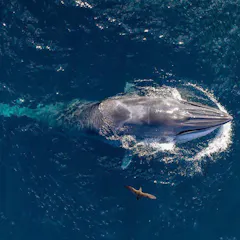
By tapping into observations of Bryde’s whale shared on social media, we found evidence of feeding and “surfing” behaviours possibly never documented before.
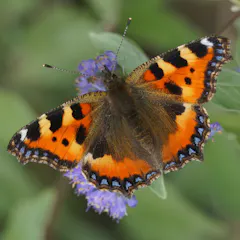
The Big Butterfly Count reported its worst results in 14 years of monitoring UK species.
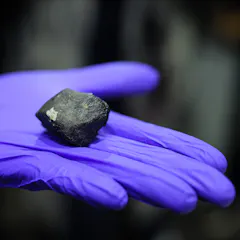
Meteorites contain a wealth of information about the origins of our solar system, helping us to understand their, and even Earth’s, origin and evolution.
Top contributors
-

Curator, Amphibian & Reptile Conservation Biology, Australian Museum, UNSW
-
Professor of Science Communication and Chemistry, University of Hull
-
Lecturer, School of Life and Environmental Sciences, University of Sydney
-
Sector Lead, Atlas of Living Australia, CSIRO
-
Dean Students, College of Health, Adelaide University
-
Associate Professor in Ecology and Evolution, UNSW
-
Associate Professor, Animal Anatomy and Physiology, Charles Sturt University
-
Adjunct Fellow, Institute for Sustainable Futures, University of Technology Sydney
-
Research Fellow at the University of Sydney, University of Sydney
-
Clinical Associate Professor, School of Medical Science & Sydney Infectious Diseases Institute; Principal Hospital Scientist, University of Sydney
-
Postdoctoral Fellow, Evolution & Ecology Research Centre, UNSW Sydney, UNSW
-
Associate Professor in Biology, Zoology and Animal Science, Western Sydney University
-
Associate Teaching Professor of Meteorology and Atmospheric Science and Manager of the Joel N. Myers Weather Center, Penn State
-
Honorary Fellow, Space and Astronomy, CSIRO; Western Sydney University
-
Chair of ARC Centre of Excellence for Quantum Biotechnology, The University of Queensland