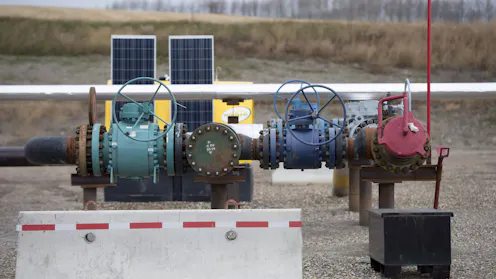
Setback regulations remain the only lever that affords some protection to those bearing the greatest health risks of shale gas development in their neighbourhoods.
The International Renewable Energy Agency projects that global ammonia demand could approach 700 million tonnes a year by 2050, nearly four times more than what is produced today.
(Unsplash)
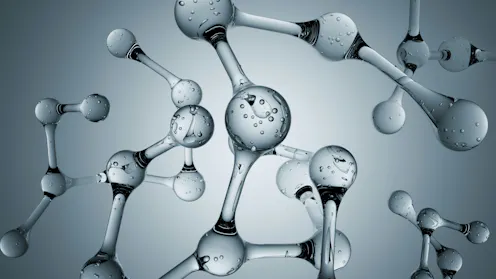
Scientific and engineering breakthroughs are allowing us to make ammonia from pollution rather than fossil fuels.
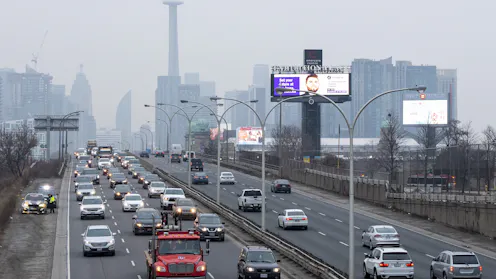
Traffic moves along a highway in Toronto, Ont. Cities built around a single transportation option, like private vehicles, are more vulnerable to disruption.
THE CANADIAN PRESS/Frank Gunn
Resilient urban mobility can be created by giving people options that ensure they can still move around when a shock affects one form of transportation.
U.S. President Donald Trump painted the Lincoln Memorial Reflecting Pool ‘American flag’ blue but it swiftly turned green as algae bloomed.
(AP Photo/Manuel Balce Ceneta)
Algal blooms are not maintenance failures requiring paint or treatment with hydrogen peroxide and nanobubbles. They are ecological warning signs.
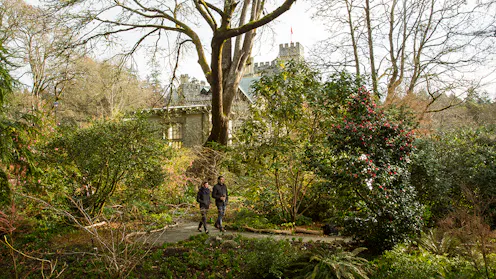
People walk on the Royal Roads University campus in Colwood, near Victoria, British Columbia. Universities can co-operate with local governments and organizations to develop ways to make communities more resilient to climate change.
(Royal Roads University)
Universities must develop an intentional, place-based approach to research and teaching that’s organized around a region’s unique and specific problems.
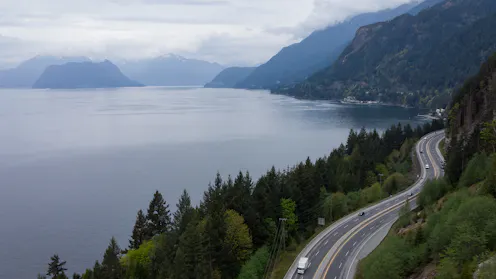
Motorists travel on British Columbia’s Sea-to-Sky highway in April 2021. Before the 2010 Winter Olympics, a section of the highway was realigned to accommodate increased traffic between Vancouver and Whistler.
THE CANADIAN PRESS/Darryl Dyck
Translocation intends to minimize the impacts of development. Research shows that we are moving millions of animals and have no idea what happens to them next.
Artificial intelligence and digital innovation minister Evan Solomon speaks before taking part in a panel discussion, ‘AI for All & Canada’s Innovation Advantage,’ during the Liberal Party of Canada convention in Montréal on April 10, 2026.
THE CANADIAN PRESS/Graham Hughes
AI is often described as if it lives in the cloud. The persistent controversies regarding the Wonder Valley project in Alberta illustrate how false that is.
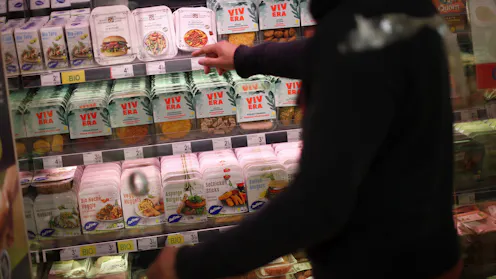
Plant-based products at a supermarket in Brussels in October, 2020. The foods we buy and consume are often discussed as if they are simply a matter of personal choice. But grocery shopping rarely works that way.
(AP Photo/Francisco Seco)
Pricing policies and retail strategies can help shift diets, but they must account for socioeconomic inequalities in how consumers respond to food prices.
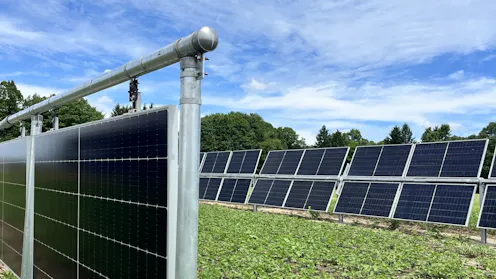
Soy grows between fences of photovoltaic solar panels at Western University in Ontario, Canada.
(B. Kayla Coban)
In Canada, agrivoltaics could produce enough electricity to eliminate the need for fossil fuels on the grid entirely, using less than one per cent of the country’s agriculture land.
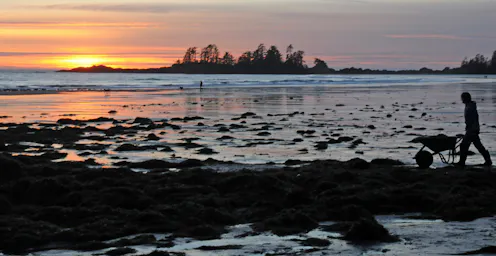
A Tofino resident picks up seaweed with a wheelbarrow on South Chesterman Beach in Tofino, B.C.
THE CANADIAN PRESS/Keven Drews
Grocery stores and the world around us are full of subtle psychological cues that encourage us to over-buy.
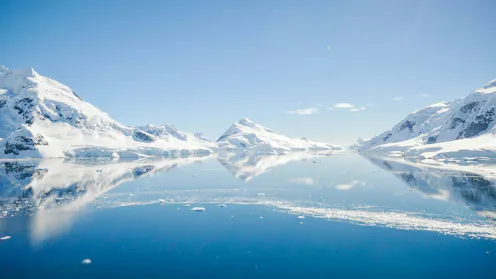
In the aquatic or frozen habitats of the North and South Poles, life is dominated by single-celled micro-organisms. Giant viruses sit at the top of the food pyramid.
(Unsplash/Henrique Setim)
Katarina Ost, L’Université d’Ottawa/University of Ottawa and Manisha A. Kulkarni, L’Université d’Ottawa/University of Ottawa
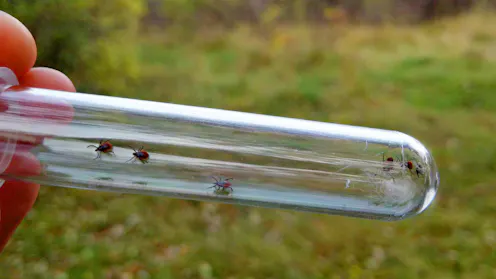
Researchers placed woodchips along the side of two trails in the Ottawa Greenbelt and found that the woodchips notably lowered the number of ticks.
Taiwan imports almost all of its energy by sea, with liquefied natural gas and coal arriving through the same maritime corridors that could become contested in a conflict.
(Getty Images/Unsplash+)
We may need to give the human digestive tract more credit for its ability to act as a barrier to microplastics.
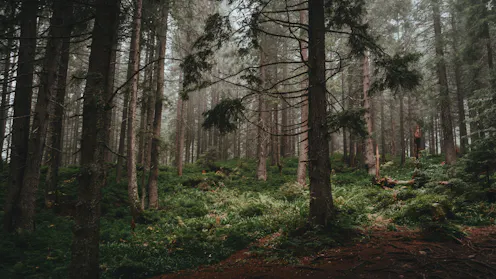
Forests everywhere are critical to climate stability, biodiversity conservation and sustainable livelihoods, yet they remain in decline due to a variety of pressures.
(Unsplash/Viacheaslav Marushchenko)
While some progress has been made since these goals were established in 2017, it is uneven. Only seven of the 26 targets have been broadly met.
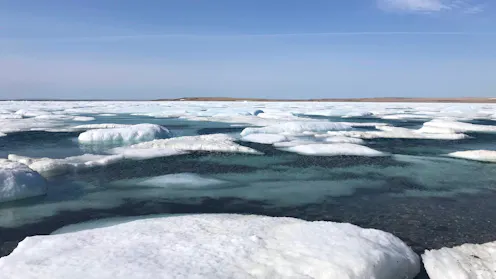
Ice-off in Resolute Bay, Nvt. Warming is leading to earlier ice-free dates and challenging the local community who uses the sea ice to access traditional hunting areas.
(Élise Devoie)
Given increasing geopolitical tensions and economic interest in the region, how can academic research support those who live in and depend on the Arctic?
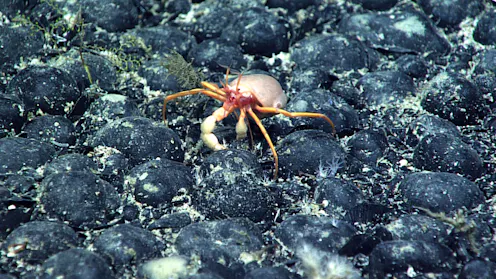
A crab with a coral on its back walks across a field of ferromanganese nodules on the seafloor of Gosnold Seamount in the North Atlantic.
(NOAA via AP)
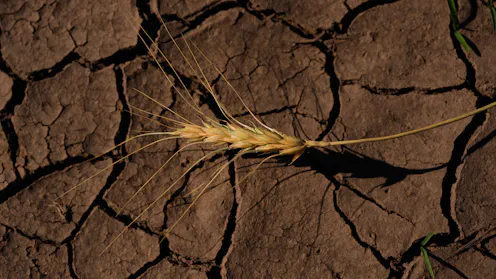
The modern food system was built on the expectation that geography would spread out the risks from droughts and floods. Climate change is testing all of that at once.
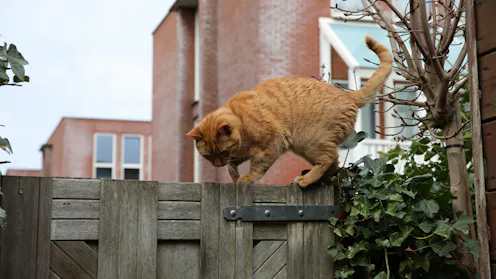
Roaming cats hunt, interact with wildlife or other domestic animals, and move through environments contaminated with pathogens and toxins.
(Unsplash/Oscar Fickel)
Thinking about how and where your cat roams outdoors can help safeguard biodiversity, feline and wildlife welfare and public health.
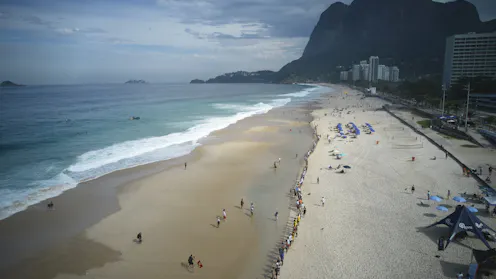
People hold hands along São Conrado beach for a symbolic group hug with the sea on World Oceans Day in Rio de Janeiro, in June 2025.
(AP Photo/Silvia Izquierdo)
There is no shortage of global objectives and targets driving ocean conservation. However, protecting oceans depends on the communities that steward them.
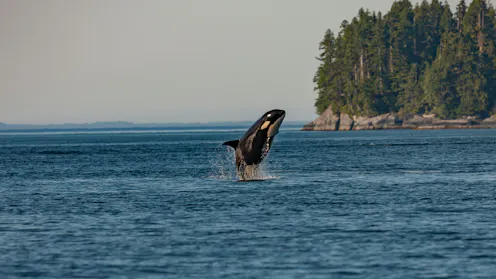
The northern resident orca is one of the species threatened by major infrastructure development in Canada.
(Unsplash/Thomas Lipke)
Impact assessments prevent harm before it occurs. Circumventing the process before we understand the risks is misguided and a gamble with our collective future.
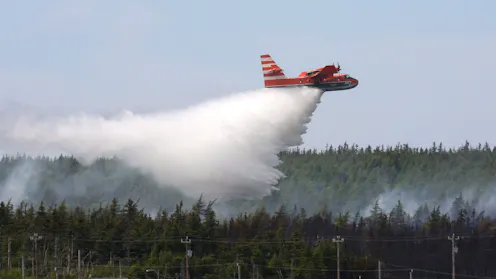
A water bomber works to bring a forest fire under control in Kenmount Terrace, a neighbourhood in St. John’s on July 9, 2018.
THE CANADIAN PRESS/Paul Daly
Canada’s wildfire aviation system remains decentralized. That model worked when fire seasons were staggered geographically. Increasingly, they are not.
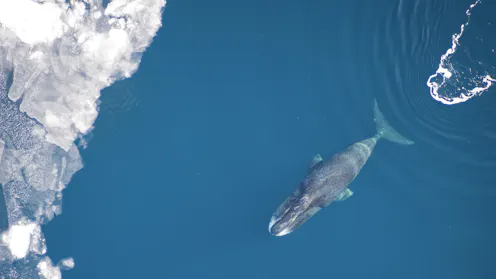
An aerial view of a bowhead whale swimming near sea ice. By the time bowhead whaling was abandoned around 1914, there were likely fewer than 4,000 left.
(Vicki Beaver/Alaska Fisheries Science Center)
New research used whaling logbooks to explain why only two of the four bowhead whale populations are bouncing back from whaling, which was abandoned a century ago.
Auckland City’s Gerard Garriga cools off under the sprinklers during a hydration break in a Club World Cup soccer match between Auckland City and Boca Juniors in Nashville, Tenn., on June 24, 2025. Experts and players have warned that FIFA is not doing enough to protect players from extreme heat during the upcoming 2026 World Cup.
(AP Photo/George Walker IV, File)